
Managing aggression in dogs requires more than just training—it demands structure, safety, and consistency. Whether you’re dealing with territorial behavior, fear-based reactivity, or resource guarding, one of the most important tools at your disposal is a reliable crate. And when aggression is part of the equation, not just any crate will do.
This is where aluminum dog crates come in. Known for their strength, containment, and calming design, aluminum crates offer unique benefits for managing aggressive or reactive dogs safely and effectively. In this article, we’ll explore how aluminum crates support aggression training, provide behavioral structure, and protect both dogs and handlers from dangerous situations.
1. Secure Containment That Withstands Pressure
Aggressive dogs—especially those with strong builds or high prey drive—can easily overpower standard crates made from plastic or wire. If a dog charges, bites, or paws at the door, weak crates may collapse, bend, or snap open, putting people and other animals at risk.
Aluminum crates are built to prevent this. They feature:
- Welded seams and reinforced panels that hold up under pressure
- Chew-proof and tamper-resistant materials
- Heavy-duty locks that resist manipulation or pawing
- Rounded corners and no sharp edges to prevent injury during escalation
This level of containment is critical when managing aggression. It allows trainers or owners to confidently place a dog in a secure environment without fear of escape or self-harm, creating the first layer of safety in any behavior modification plan.
2. Reduces Overstimulation and External Triggers
Many aggressive behaviors are triggered by overstimulation. For reactive dogs, simply seeing other dogs, strangers, or fast movement can ignite barking, lunging, or defensive growling. This is especially common in multi-pet households or public settings.
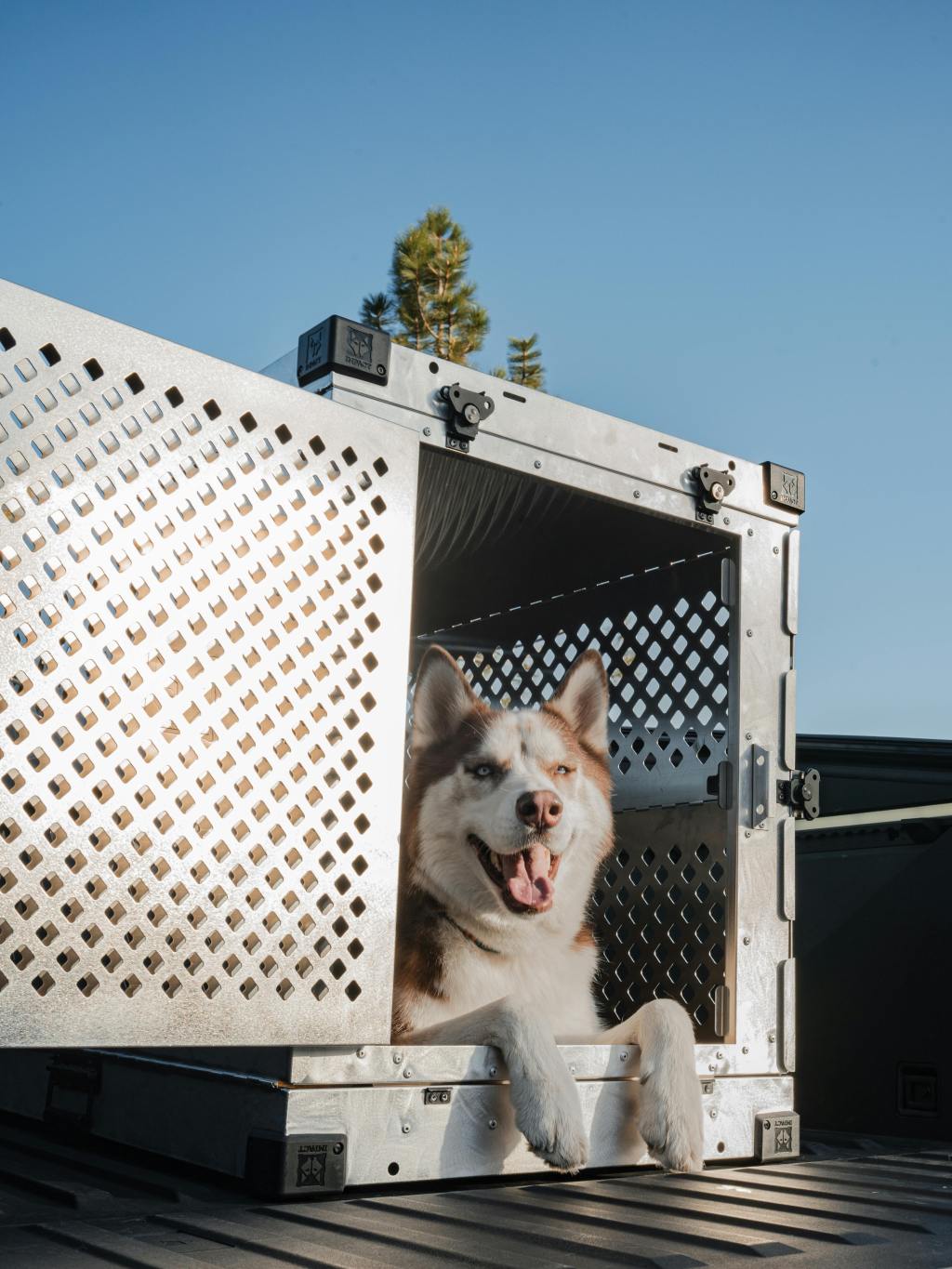
Aluminum crates reduce these triggers by providing partial visual shielding. Unlike wire crates, which offer full 360° visibility, aluminum crates feature:
- Strategic ventilation holes that allow airflow without overexposure
- Solid panel walls that create a den-like space
- Quiet interiors that muffle external noise and reduce anxiety
This reduction in sensory input helps the dog stay calmer for longer, which supports recovery between training sessions and lowers baseline stress levels. According to the American Veterinary Society of Animal Behavior (AVSAB), minimizing a dog’s exposure to triggers is one of the most effective ways to reduce reactive behavior over time.
3. Supports Crate Training as a Behavior Tool
Crate training isn’t just for puppies. For dogs with aggression issues, crate time can be a powerful tool when used correctly. It gives the dog a consistent space to decompress, relax, and learn boundaries without confrontation or punishment.
With aluminum crates, the experience becomes more effective and safer because:
- The dog is less likely to injure themselves during moments of panic
- The crate doesn’t rattle or collapse under pressure
- The space becomes a predictable zone of calm
Used as part of a behavior plan, crate time can help rewire the dog’s stress response and build impulse control, especially during high-risk times like feeding, guest arrivals, or transport.
4. Facilitates Safe Introductions and Threshold Training
Aggression management often involves slowly reintroducing the dog to triggers—whether it’s other pets, strangers, or certain environments. These introductions must happen at safe distances and with complete control over the dog’s movements and exposure.
Aluminum crates make this possible. They provide a secure way to:
- Allow the dog to observe from a safe distance
- Prevent lunging, charging, or sudden escapes
- Conduct threshold training, where the dog learns to remain calm while triggers are nearby
When used in a training center or at home, aluminum crates allow for controlled proximity to other dogs or humans, reducing the risk of escalation and injury.
5. Resists Chewing, Digging, and Damage From Stress Behaviors
Many dogs show stress through destructive behaviors, including chewing on crate bars, digging at doors, or ramming into panels. These behaviors can injure the dog or destroy the crate—unless the crate is built to resist them.
Aluminum crates are:
- Chew-proof due to their hard metal surface
- Scratch- and impact-resistant, preventing wear and breakdown
- Non-toxic and non-absorbent, so saliva or urine won’t damage the finish
This is particularly helpful for dogs who exhibit redirected aggression or displacement behaviors inside the crate. The strength of aluminum prevents damage and keeps the environment safe, even during stressful moments.
6. A Safer Option for Handlers and Family Members
Aggressive dogs pose a risk to more than just themselves. A broken latch or bent crate door can result in an unexpected bite or chase. With aluminum crates, you reduce the chance of accidents by adding an extra layer of protection between the dog and the outside world.
This safety is crucial for:
- Families with children
- Multi-dog homes
- Trainers or behaviorists managing extreme aggression
- Emergency situations or travel
According to the Centers for Disease Control and Prevention (CDC), more than 4.5 million people are bitten by dogs each year in the U.S., and proper containment is one of the most important prevention tools.
Final Thoughts: Structure That Creates Progress
Managing aggression isn’t about punishment—it’s about creating safe, structured environments that reduce triggers, support calm behavior, and allow for consistent training. Aluminum crates provide exactly that. They don’t just contain your dog—they give them a chance to succeed.
With unmatched bite resistance, ventilation, and visual shielding, aluminum crates are one of the smartest tools you can use to support a dog on a behavior modification journey.Looking for a crate that meets the needs of aggressive or reactive dogs? Explore high-strength, anxiety-conscious designs at Impact Dog Crates—engineered to support behavior plans, built to last.






 Aluminum Dog Crates
Leave a comment