
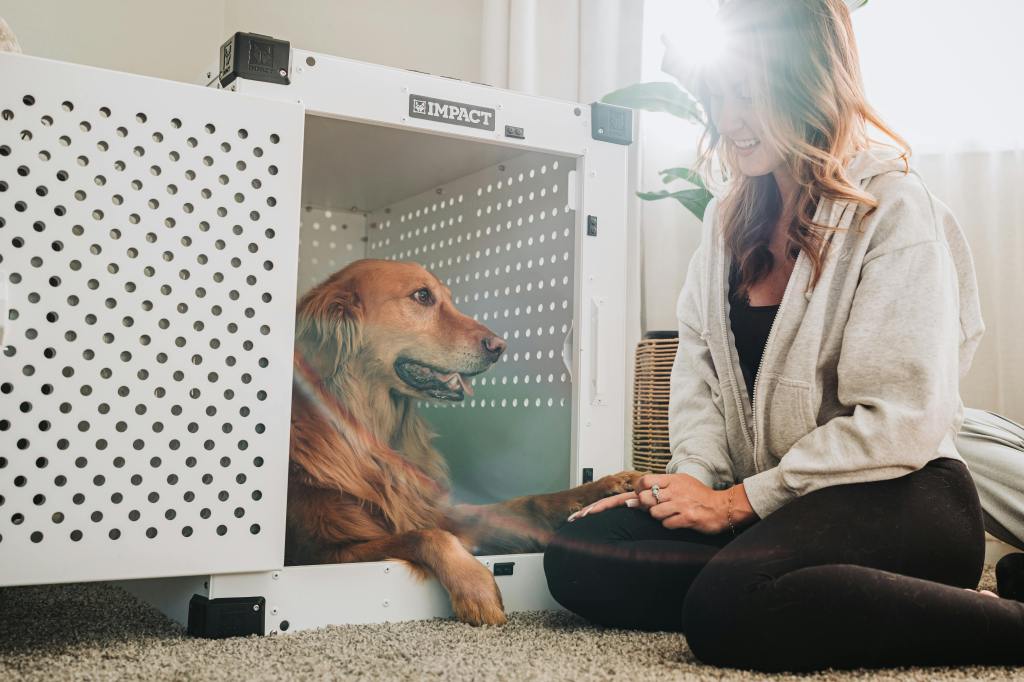
For dog owners dealing with powerful chewers, anxious crate escape artists, or high-drive working dogs, durability isn’t just a preference—it’s a requirement. A strong dog with separation anxiety or an intense work ethic can tear through plastic and bend wire crates in record time, putting themselves and your property at risk.
This is where aluminum dog crates stand in a class of their own. Built with aircraft-grade materials, these crates aren’t just tough—they’re engineered for strength at every point. In particular, they offer superior bite resistance, making them the best option for dogs that test the limits of containment.
In this article, we’ll break down exactly why aluminum outperforms other materials when it comes to resisting chewing, biting, and destruction—and why it’s the smart choice for long-term safety and peace of mind.
1. Aluminum Is Structurally Strong and Difficult to Penetrate
Dogs with powerful jaws—think German Shepherds, Malinois, Pit Bulls, or Rottweilers—can crush, bend, or tear through plastic and wire in minutes. Even medium-strength chewers can create damage over time that weakens a crate’s structure.
Aluminum, especially when it’s aircraft-grade or powder-coated, is:
- Resistant to puncture and cracking
- Harder than plastic but lighter than steel
- Capable of absorbing pressure without bending or tearing
A dog may try to chew an aluminum crate, but the material offers no give, no grip, and no reward. Unlike wire, which can be manipulated with leverage, aluminum panels are typically solid and flush, eliminating chew points and bending angles.
2. Welded Seams and Reinforced Corners Prevent Weak Points
Plastic crates often break at the seams. Wire crates separate at the joints. Even cheap aluminum units that rely on screws or bolts can loosen with time. High-quality aluminum crates are welded along all major joints, creating a seamless, bite-proof structure.
Key bite-resistant features include:
- Single-panel door construction
- Welded hinges and latches
- Reinforced corners to resist flexing
- Smooth, flat panels that lack chewing leverage
These design features make it nearly impossible for a dog to gain traction or apply enough pressure to cause damage, which is critical when managing crate anxiety or escape attempts.
3. Tamper-Proof Latching Systems Resist Pawing and Biting
Dogs that chew usually start at the weakest part of the crate—the latch. Traditional spring-latch wire crates are easily bent or popped by a determined dog. In contrast, aluminum crates often use:
- Slam latches with no exposed parts
- Internal locking mechanisms
- Recessed or protected handles
- Padlock-ready configurations
These latches are designed to resist pawing, prying, and biting, preventing dogs from focusing their energy on one vulnerable point. This helps reduce obsessive behavior, escape success, and self-injury.
4. Bite-Proof Doesn’t Mean Uncomfortable
Some owners worry that a crate made from metal will be too harsh for their dog. But modern aluminum crates are built with comfort in mind, including:
- Smooth interior walls with rounded corners
- Optional crate pads or liners that protect joints
- Ventilation holes designed to prevent paw or jaw injury
According to the American Kennel Club, a crate should provide a safe, den-like space that dogs associate with calm and comfort. A bite-resistant crate with the right interior environment can actually reduce chewing behaviors over time—because it removes the stress that causes them in the first place.
5. Long-Term Resistance Saves Money and Frustration
Every time a plastic or wire crate breaks, it costs money—and not just for the replacement. There’s also the risk of:
- Vet bills for tooth or jaw injuries
- Property damage from escaped dogs
- Delays in training or travel due to failed containment
Aluminum crates eliminate this cycle. One crate can last 10 years or more, making it the most cost-effective option over time—especially if your dog has a history of chewing or crate resistance.
6. Trusted by Professionals for Bite-Proof Performance
There’s a reason aluminum crates are standard issue in military K9 units, police departments, and professional working dog teams. These dogs operate under high stress, face extreme environments, and require reliable, secure containment.
Whether the crate is used in a patrol vehicle, a kennel trailer, or at a field competition, professionals choose aluminum because it offers:
- Escape prevention
- Impact resistance
- Zero tolerance for chewing
This same level of protection is now available to everyday dog owners dealing with similar behavior challenges.
7. Ideal for Anxious Dogs and First-Time Crate Users
Chewing often stems from anxiety or unfamiliarity with the crate. Aluminum crates help reduce both by:
- Offering a quiet, non-rattling structure
- Reducing sensory overload with partial visibility
- Giving dogs a consistent, calming enclosure
Once they learn that chewing yields no result, most dogs abandon the behavior entirely. That’s something soft-sided, collapsible, or mesh crates simply can’t offer.
Final Thoughts: Bite Resistance Is About Safety, Not Just Strength
An aluminum dog crate doesn’t just survive chewing—it prevents it. With zero flex, no weak points, and reinforced latches, it removes every incentive for your dog to bite or escape. That’s not only safer for them—it’s better for you.For dog owners seeking the ultimate in bite-proof design, explore professional-grade aluminum dog crates at Impact Dog Crates—built to outlast, outperform, and outsmart even the strongest jaws.






 Aluminum Dog Crates
Leave a comment