
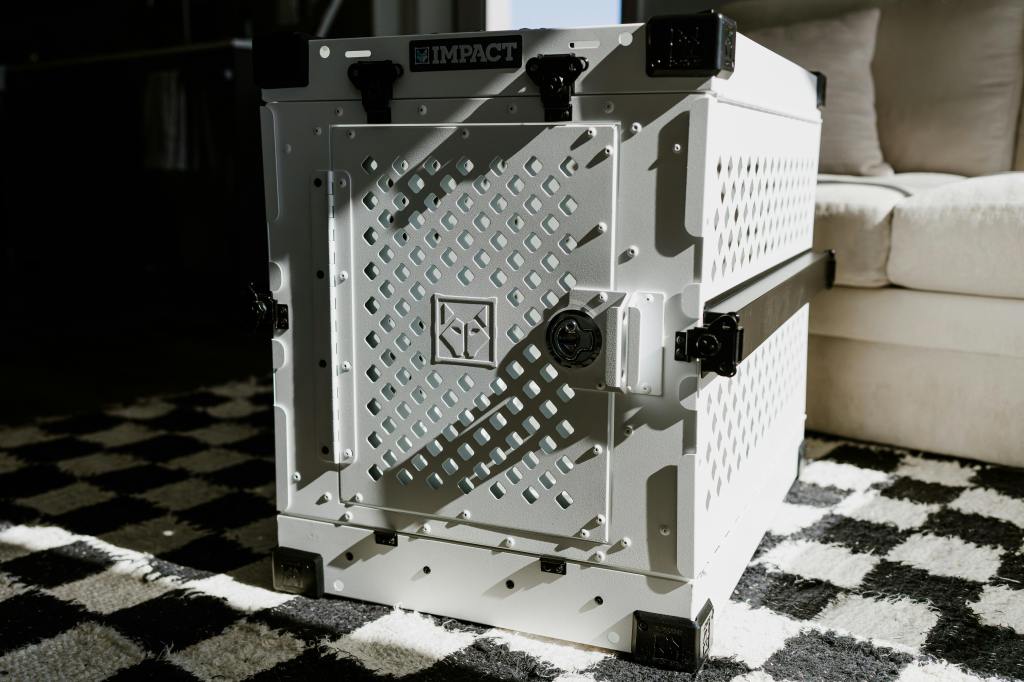
Why Aluminum Alloys Matter in Dog Crates
When selecting a dog crate, the material choice directly impacts your pet’s safety, comfort, and your peace of mind. Aluminum crate alloys have emerged as the gold standard for discerning dog owners who refuse to compromise on quality.
The unique properties of these alloys create an exceptional combination that other materials simply can’t match. Aluminum crate strength delivers remarkable durability while maintaining a surprisingly lightweight profile, making crates easier to transport and position in your home. Unlike steel crates that rust over time or plastic alternatives that crack under pressure, quality aluminum alloys resist corrosion and maintain their structural integrity for years to come.
Your dog’s wellbeing benefits tremendously from this material choice. The natural properties of aluminum allow for excellent airflow while maintaining clear visibility, helping reduce anxiety during crate time. Your pet gets a space that feels open and comfortable rather than confined—a crucial factor for stress-free training and rest periods.
The durability factor extends well beyond immediate safety concerns. Premium aluminum alloys withstand the daily challenges active dogs present, from persistent scratching to unexpected impacts, without showing significant wear. This resilience translates to exceptional value for your investment. You won’t face frequent replacements or costly repairs down the road.
Lightweight crate materials also bring greater versatility to your daily routine. Whether you’re traveling cross-country, moving the crate to different rooms, or storing it temporarily, the manageable weight reduces physical strain while maintaining the robust protection your dog deserves.
The material you choose makes a real difference in long-term satisfaction. Understanding how aluminum crates vs plastic dog crates perform in real-world scenarios helps illustrate why aluminum alloys consistently outperform alternatives when it comes to combining strength, durability, and everyday practicality.
Understanding Different Types of Aluminum Alloys
Not all aluminum crate alloys are created equal, and understanding these differences helps you make a confident choice for your dog’s safety and comfort. Each alloy grade brings distinct properties that directly impact how well your crate will protect your pet while remaining manageable for daily use.
The most common aluminum crate alloys include:
• 6061 Aluminum Alloy – The workhorse of the aluminum world, known for its excellent strength-to-weight ratio and superior weldability. This makes it ideal for structural components that need to withstand impact while keeping your crate lightweight and portable.
• 6063 Aluminum Alloy – Offers good corrosion resistance and creates smooth, attractive finishes. You’ll find this alloy in architectural applications, but it has lower strength characteristics than 6061, making it less suitable for high-impact pet containment.
• 7075 Aluminum Alloy – The heavyweight champion that provides exceptional strength comparable to steel while maintaining aluminum’s lightweight benefits. However, it requires more specialized manufacturing processes, which can drive up costs.
• 5052 Aluminum Alloy – Features excellent corrosion resistance and moderate strength. While it’s popular in marine applications, it’s less suitable for the high-stress demands of pet containment.
What is Aircraft-Grade Aluminum?
Aircraft-grade aluminum refers to alloys that meet strict aerospace industry standards for strength, fatigue resistance, and quality control. While impressive sounding, this designation doesn’t automatically make an alloy the best choice for pet crates. The specific requirements for aircraft differ significantly from those needed for safe, comfortable pet containment.
Here’s what many dog owners miss: alloy selection depends on intended use, not just grade prestige. A well-engineered 6061 aluminum crate often outperforms poorly designed aircraft-grade alternatives because manufacturing quality, wall thickness, and structural design matter more than alloy type alone. The strongest aluminum crate alloys must balance impact resistance, weight management, and long-term durability. Our detailed analysis of alloy performance versus aircraft-grade competitors shows how different standards compare in real-world testing scenarios.
The Balance Between Strength and Weight
When selecting aluminum crate alloys, the strength-to-weight ratio becomes your most important consideration. As a dog owner, you need a crate that can contain a powerful, anxious, or escape-prone dog while still being light enough to move when needed. It’s a genuine engineering challenge that separates premium crates from basic alternatives.
The best manufacturers solve this puzzle through careful material science. They don’t just pick any aluminum—they select specific alloys that deliver maximum protection without unnecessary bulk. This balance matters whether you’re loading a crate into your vehicle for a vet visit or setting up a safe space in your home.
Several factors make this balance possible:
• Advanced alloy composition – Premium aluminum crates use alloys enhanced with magnesium and silicon, boosting tensile strength without adding weight
* Smart structural design – Engineers place reinforcement exactly where stress concentrates, using material efficiently
* Optimized wall thickness – Modern manufacturing creates thinner walls that maintain strength through superior alloy formulations
* Superior joint construction – Welded connections and reinforced corners distribute force better than basic fasteners
* Protective surface treatments – Anodizing and powder coating prevent corrosion while adding minimal weight
Real-World Impact: Today’s aluminum crate alloys can reduce weight by up to 40% compared to steel construction while matching or exceeding strength performance.
The science behind durable aluminum alloys has advanced dramatically in recent years. Premium manufacturers invest in extensive testing to identify compositions that excel under real-world stress—from a Great Dane throwing his full weight against the door to the vibration and impacts of vehicle transport.
When you’re comparing options, understanding how aluminum crate performance varies across different grades helps you choose a crate that protects your dog while fitting your lifestyle. The right aluminum crate alloys give you confidence in your dog’s security without the back strain of moving a unnecessarily heavy crate.
How Aluminum Crates Ensure Your Dog’s Safety
When your dog’s safety is on the line, aluminum crate alloys deliver the superior protection that gives you complete confidence in your pet’s security. These premium materials create a fortress-like barrier that withstands the unexpected while maintaining the lightweight convenience every dog owner needs. The advanced engineering behind quality aluminum alloys transforms ordinary containment into comprehensive protection.
The safety advantages of aluminum crate construction include:
• Exceptional impact resistance that protects your dog during sudden stops, vehicle accidents, or rough handling during transport, with the metal’s natural shock-absorption properties distributing force away from your pet
• Uncompromising structural integrity that prevents dangerous collapse or warping under pressure, ensuring the crate maintains its protective shape even when subjected to extreme weight or force
• Superior corrosion resistance that maintains strength over years of use, preventing rust-related weakening that could create sharp edges or structural failures
• Natural temperature regulation that prevents dangerous overheating in vehicles or extreme weather conditions, keeping your dog comfortable and safe
• Chew-proof durability that protects anxious or aggressive chewers from ingesting harmful materials while preventing escape-related injuries
Real-world scenarios truly highlight aluminum’s critical safety role. During emergency braking, aluminum crates maintain their structural integrity while plastic alternatives may crack or shatter. Airlines consistently choose aluminum for cargo holds because the material withstands turbulence and handling equipment without compromising passenger or pet safety. Even determined escape artists find aluminum’s smooth, strong surface impossible to damage or manipulate dangerously.
The difference becomes crystal clear when you see how aluminum performs against other materials in actual testing. Picture a nervous German Shepherd clawing at a plastic crate wall versus the same scenario with aluminum—there’s simply no comparison in terms of safety and containment. Our detailed comparison of aluminum versus plastic crates reveals why discerning dog owners consistently choose aluminum for maximum protection, showing the measurable differences that matter most when protecting your beloved companion.
Choosing the Right Aluminum Crate for Your Needs
Selecting the perfect aluminum crate starts with understanding your dog’s unique needs and your family’s lifestyle. The specific aluminum crate alloys used in construction directly impact how well the crate will serve you both in daily use and emergency situations.
Begin by evaluating your dog’s size, temperament, and activity level. Larger, more energetic breeds require crates built with higher-grade aluminum alloys that can withstand significant force without compromising structural integrity. Getting the right fit is essential for both safety and comfort, so be sure to check our dog crate sizing guide to determine the ideal dimensions before diving into material specifications.
Your travel patterns and storage needs matter just as much. If you frequently move your crate or work with limited storage space, lightweight crate materials become crucial—but never at the expense of aluminum crate strength. Premium aluminum alloys give you the best of both worlds, making your crate easy to transport and store while delivering the robust protection your dog deserves.
Think about your environment and how you’ll actually use the crate. Dogs who spend extended periods in their crates benefit enormously from aluminum’s superior ventilation and temperature regulation. The durability of professional-grade aluminum alloys means your investment protects your companion for years, not just months.
Weather resistance deserves consideration too. Whether you’re camping, traveling cross-country, or simply dealing with seasonal humidity changes, aluminum’s natural corrosion resistance ensures your crate maintains both its structural integrity and appearance over time.
Choosing the right crate is ultimately an investment in your dog’s safety and your own peace of mind. Quality aluminum construction provides the confidence that comes from knowing your companion is secure, comfortable, and protected—no matter what situation you face together.






 Aluminum Dog Crates
Leave a comment