
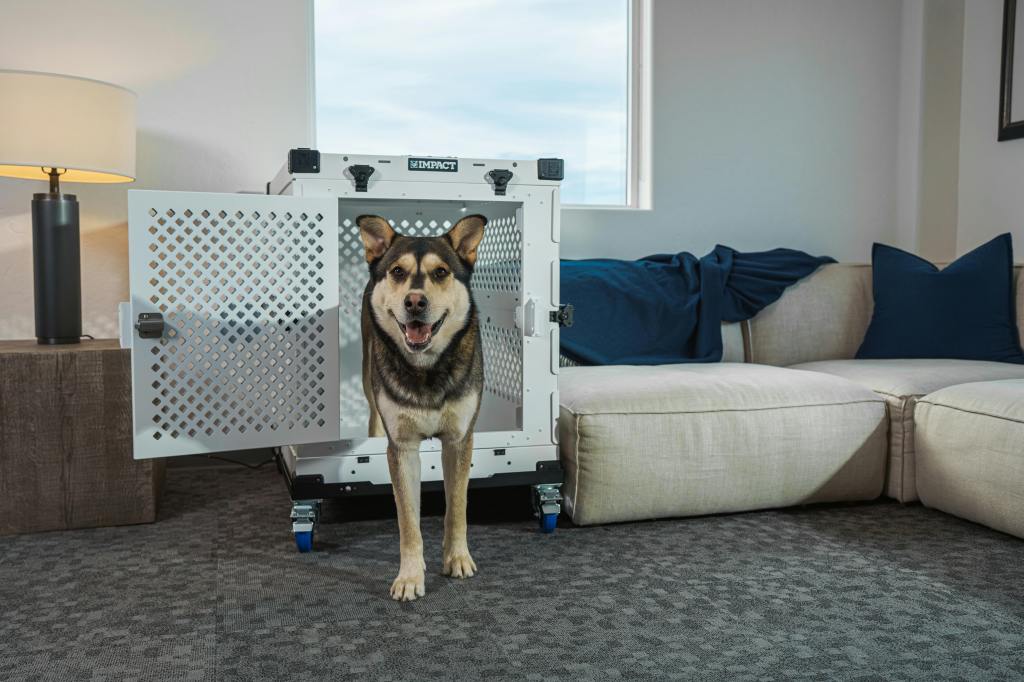
Understanding Aluminum Crate Safety: Welds vs. Rivets
When choosing an aluminum dog crate, the construction methods that hold everything together can mean the difference between complete peace of mind and sleepless nights worrying about your pet’s safety. Two primary techniques dominate aluminum crate manufacturing: welding and riveting. Each brings distinct advantages that directly impact how well your crate protects and contains your dog.
A welded aluminum crate features joints where metal pieces are heated and fused together, creating seamless connections that become as strong as the original aluminum itself. Think of it as turning multiple pieces into one unified structure. This eliminates weak points and creates a fortress-like barrier that can handle serious stress over years of use.
Riveted construction takes a different approach, using mechanical fasteners to join aluminum pieces. Picture it like connecting building blocks with sturdy pins. While this method offers manufacturing flexibility and works well for many situations, it creates multiple connection points that can experience varying stress patterns when your dog pushes against the walls.
These construction differences matter tremendously when you consider real-world scenarios. An anxious rescue dog scratching frantically at corners, a large breed throwing their weight against the door, or simply the wear and tear of daily loading and unloading—your crate needs to handle it all without compromise.
Why aluminum makes such an excellent crate material goes beyond just the joining methods, but understanding these construction fundamentals helps you choose the right protection level for your specific situation.
The Strength of Welds in Aluminum Dog Crates
Welding transforms aluminum into something far stronger than the sum of its parts. When aluminum pieces are welded together, they don’t just connect—they fuse at the molecular level, creating one continuous piece of metal. This means your welded aluminum crate has no weak spots where separate components might eventually fail under pressure.
Think of it like the difference between a chain and a solid steel bar. A chain is only as strong as its weakest link, but a welded crate becomes one unbreakable unit. This seamless construction distributes stress evenly across the entire framework, giving your dog maximum protection when it matters most.
Professional crate manufacturers use several specialized welding techniques to achieve this level of strength:
• TIG (Tungsten Inert Gas) Welding – Creates exceptionally clean, precise joints that often become stronger than the original aluminum itself
* MIG (Metal Inert Gas) Welding – Delivers fast, consistent welds with excellent fusion, ensuring uniform strength throughout the crate
* Pulse Welding – Controls heat precisely to prevent warping while maintaining deep penetration for lasting durability
* Automated Welding Systems – Eliminates human inconsistency, ensuring every joint meets exact safety specifications
* Post-Weld Heat Treatment – Relieves internal stress and optimizes the metal’s properties for long-term reliability
Key Fact: Welded joints typically achieve 85-100% of the base material’s strength, while riveted connections generally reach only 60-75% strength capacity, making welded construction significantly more reliable under stress.
This superior aluminum dog crate safety becomes even more apparent when quality welding meets premium materials. Aircraft-grade aluminum responds exceptionally well to professional welding, creating joints that maintain their integrity year after year, giving you confidence that your investment will protect your companion for the long haul.
The Role of Rivets in Durability and Flexibility
Rivets serve as strategic connection points in aluminum dog crate construction, creating controlled flex zones that allow the structure to absorb impact energy without transferring excessive stress to surrounding materials. This flexibility becomes particularly valuable when crates experience sudden forces during travel or when energetic dogs move around inside, as the riveted joints distribute these loads more evenly across the frame.
Several key advantages make riveted construction appealing for specific crate applications:
• Field repairability allows owners to replace individual rivets if damage occurs, extending the crate’s useful life without requiring specialized welding equipment
* Reduced stress concentration prevents crack propagation that can sometimes occur at welded joints under repeated loading
* Cost-effective manufacturing enables producers to create durable crates at more accessible price points while maintaining structural integrity
* Disassembly capability permits component replacement or modifications when needed, supporting long-term maintenance
* Thermal expansion accommodation allows different parts to move slightly as temperatures change, preventing binding or warping
When comparing riveted systems to a welded aluminum crate, each method excels in different scenarios. Rivets shine in applications requiring flexibility, easier maintenance, and cost considerations. A welded aluminum crate delivers superior strength for maximum security applications. Riveted joints work particularly well in dynamic loading situations where some movement benefits rather than hinders performance.
This construction method offers distinct advantages for certain crate designs and user needs. Rivets prove especially effective in collapsible crate designs, where riveted joints enable folding mechanisms while maintaining structural reliability during use. For pet owners prioritizing portability and field serviceability, riveted construction provides a practical balance of durability and convenience.
Why Impact Dog Crates Choose Welds for Safety and Security
At Impact Dog Crates, we deliberately choose welded construction over riveted assembly because your dog deserves the highest level of protection and security. Our commitment to welded aluminum crate manufacturing stems from years of understanding what happens when powerful, anxious, or escape-prone dogs meet inferior containment systems.
When we engineer our welded construction, we’re solving real problems dog owners face every day:
• Superior structural integrity that eliminates potential failure points where rivets could loosen or break under stress
* Enhanced escape-proofing for dogs who view traditional crates as puzzles to solve during anxiety episodes
* Seamless joint strength that maintains consistent durability across the entire crate structure
* Long-term reliability that won’t deteriorate over years of regular use and cleaning
* True peace of mind knowing your investment provides unwavering protection for both your dog and your home
Our manufacturing expertise ensures every welded aluminum crate meets rigorous quality standards that address the safety concerns we hear about most. Riveted alternatives develop weak points over time—we’ve seen it happen. Our precision welding creates permanent bonds that actually strengthen with age, making them particularly valuable for owners of large breeds, anxious dogs, or any pet requiring secure containment.
The real validation comes from our community. Dog owners who’ve made the switch consistently tell us about the transformation they experience. Many have shared their stories about switching from wire crates to Impact Dog Crates, and the common thread is always the same: improved safety, genuine security, and that irreplaceable peace of mind that comes with knowing your setup actually works.
Making the Right Choice for Your Pet’s Safety
When choosing the safest option for your beloved companion, the construction method of your aluminum crate makes all the difference. A welded aluminum crate delivers superior strength and security, especially for powerful dogs or anxious pets who might test their enclosure’s limits. Those seamless joints created through welding eliminate weak points that could compromise your dog’s safety during transport or at-home containment.
Think about your dog’s temperament, size, and specific needs when evaluating aluminum dog crate safety options. Active breeds, escape artists, or dogs experiencing separation anxiety benefit tremendously from the robust construction that welding provides. Riveted designs offer adequate strength for many situations, but they can’t match the structural integrity of welded joints when maximum security is non-negotiable.
Investing in a welded aluminum crate pays dividends in peace of mind and long-term durability. Instead of replacing damaged or compromised crates over time, you’re choosing a solution built to last through years of faithful service. Our commitment to welded construction at Impact Dog Crates reflects our understanding that your dog’s safety simply isn’t up for compromise.
Your choice ultimately comes down to what matters most: temporary convenience or lasting protection. The riveted vs welded dog crates debate often centers on cost, but true value lies in the welded aluminum crate benefits you’ll experience day after day. When you’re ready to explore which crate type best suits your specific situation, our comprehensive guide on choosing the best crate for your dog offers additional insights to guide your decision.
“






 Aluminum Dog Crates
Leave a comment