
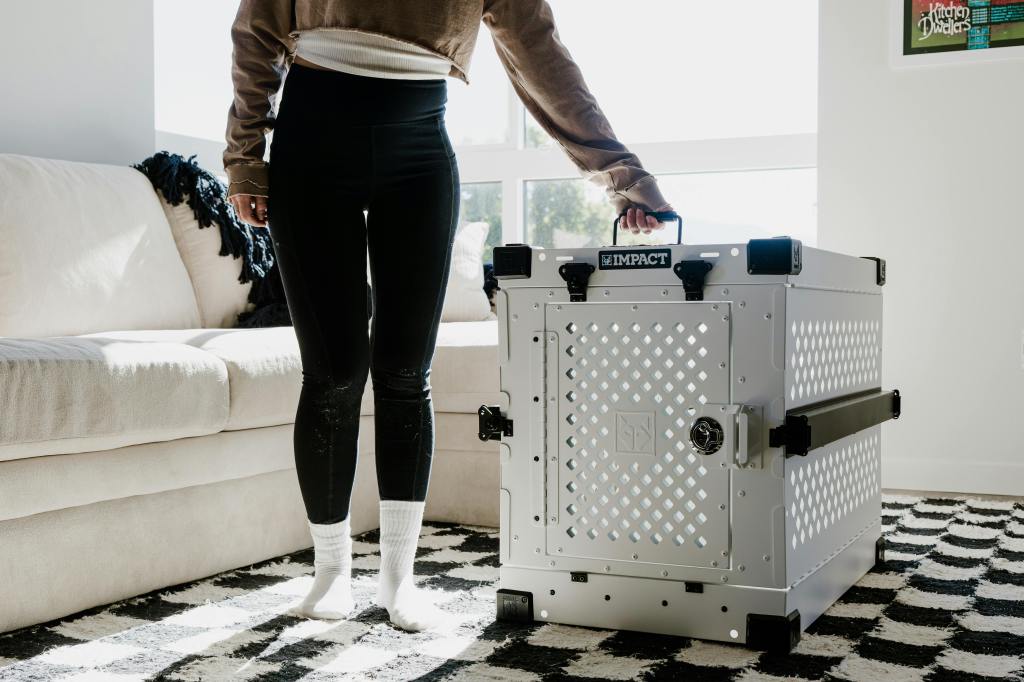
Police and military working dogs are some of the most highly trained and physically powerful canines in the world. They perform duties in high-stakes environments—tracking suspects, detecting explosives, and protecting their handlers under extreme conditions. With that level of responsibility comes the need for gear that’s as tough and reliable as they are.
That’s why aluminum dog crates are the preferred choice for law enforcement, military K9 units, and tactical handlers around the world. These crates offer unmatched strength, security, and dependability in the field—qualities that plastic, fabric, or even standard wire crates simply can’t provide.
Let’s break down the key reasons why aluminum crates are the standard in professional K9 operations and how these features translate into real-world safety and performance.
1. Built for Impact, Built for Safety
Military and police dogs travel constantly—whether in SUVs, helicopters, armored vehicles, or cargo vans. Their crates must hold up under hard use, rough terrain, and potential collision.
Aluminum crates offer:
- Welded seams and reinforced corners that resist warping or failure
- Thick, aircraft-grade aluminum walls to handle impact and pressure
- Powder-coated or anodized finishes to prevent corrosion, even in extreme weather
This durability protects the dog not only from accidents but also from attempts to escape or damage the crate when stressed, anxious, or highly stimulated after deployment.
2. Designed for Containment and Control
Working dogs in law enforcement or the military are often trained in protection, bite work, and patrol duties. Their drive is high, and their strength is unmatched. In the wrong crate, this can lead to escape, injury, or destruction.
Aluminum crates are favored for their:
- Chew-proof design, with smooth, solid panels that prevent damage
- Tamper-proof latches and locking systems, often recessed to avoid paw access
- Escape-proof construction, ideal for high-drive and aggressive dogs
These crates help keep both the dog and others safe in confined spaces or high-risk environments. They allow handlers to focus on the mission—not the crate.
3. Ventilation Without Overexposure
Unlike mesh or wire crates, aluminum crates used in tactical settings provide limited visibility, which reduces overstimulation and keeps the dog calm between assignments. However, they also allow critical airflow.
Most professional-grade crates feature:
- Precision-cut ventilation holes or slats along multiple sides
- Cross-ventilation designs that allow air movement without compromising security
- Optional covers or shade kits for desert or tropical environments
Proper airflow is essential for regulating a dog’s body temperature, especially during high-stress deployments. According to the American Kennel Club, dogs rely on ventilation and shade to prevent overheating during working hours—and aluminum crates strike that balance perfectly.
4. Optimized for Vehicle and Tactical Transport
K9 vehicles—whether they’re patrol cars, SUVs, or military transport—often carry multiple dogs, gear, and weapons. Aluminum crates are uniquely suited for tight cargo areas and high-volume setups due to their:
- Tie-down compatibility, allowing crates to be bolted or strapped down securely
- Stackability and modular designs, ideal for multi-dog units
- Lightweight nature, making them easier to load into transport vehicles
- Side-door or dual-access options, ensuring quick deployment in emergencies
In the field, speed matters. Being able to load, unload, and access a crate without delay can make a life-saving difference.
5. Resistant to Harsh Environments
From arid deserts to freezing climates, military and police units operate in some of the harshest places on earth. Aluminum crates are designed to withstand exposure to:
- Rain, snow, and saltwater
- Sand, dust, and mud
- UV rays and high temperatures
- Heavy impacts and extreme motion
Because aluminum doesn’t rust or degrade like steel or plastic, it provides year-round reliability—without frequent replacement or maintenance.
This matters when you’re operating overseas or in remote regions where resupply and repair aren’t immediate options. According to the U.S. Army Veterinary Services, containment systems for military working dogs must be “portable, secure, and easily sanitized”—boxes that aluminum checks with ease.
6. Sanitary, Easy to Clean, and Hygienic
Dogs working in the field can bring back dirt, bodily fluids, or contaminants after missions. Aluminum crates are non-porous and easy to sanitize, which reduces the risk of disease spread and keeps dogs healthier over time.
Crates used in military settings must be:
- Disinfected between uses
- Free of odor-retaining materials
- Quick-dry and rust-free
That’s why aluminum—unlike fabric, wood, or mesh—is often the only material allowed in official K9 vehicle or housing specs.
Final Thoughts: Mission-Ready and Field-Tested
For military and police handlers, their K9 partner is more than a tool—they’re a teammate. That’s why the crate isn’t just a storage box—it’s a critical part of the working dog’s daily routine and long-term health.
Aluminum crates provide unmatched security, strength, and performance under pressure. From transport safety to behavioral control, from heat resistance to hygiene, they’re built to handle whatever the mission demands—and keep the dog secure and comfortable in the process.
Whether you’re managing a tactical team or working with high-drive dogs in extreme settings, aluminum crates deliver the reliability that professionals require.Explore duty-ready crate options trusted by handlers worldwide at Impact Dog Crates—engineered for elite working dogs, built for life in the field.





Leave a comment